




Your cart
Order note
Order special instructions
Discount
Discount invalid. Please make sure the discount details are correct.
Free shipping code should be applied later on Checkout page.
Discount code is already applied.
Discount applied!
Chalk

Chalk
Gym chalk is magnesium carbonate that you rub onto your hands to keep them dry and hold the bar, kettlebell or climbing hold more securely. Supps247 currently stocks Ultimate Grip Pro, a low-dust magnesium carbonate chalk in a 200 g resealable pouch, for lifters, CrossFit athletes, gymnasts and climbers.
Read the Chalk buying guide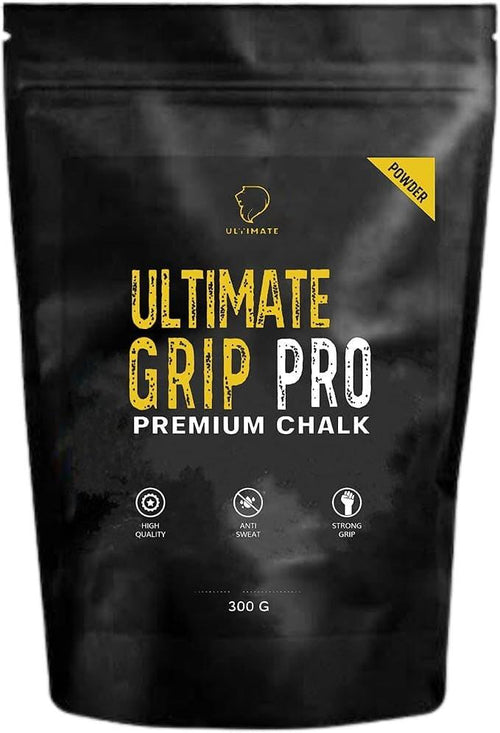
No products found for ""
Chalk: buying guide
What chalk does
Sweaty hands slip. Chalk absorbs moisture on your palms and fingers, so your grip is less likely to fail before the muscles you are training. It is especially useful on deadlifts, pull-ups, kettlebell swings, Olympic lifts and climbing, and on bars with worn knurling.
Chalk or lifting straps?
- Chalk keeps your own grip working. It suits most sets and is permitted in many sports.
- Lifting straps take grip out of the equation on very heavy pulls or long sets. See our lifting straps.
Many lifters use chalk for most sets and save straps for the heaviest work.
Is chalk allowed in competition?
In powerlifting, the International Powerlifting Federation's 2026 technical rules list magnesium carbonate among the only substances that may be applied to the body and attire, but not to wrist wraps or the underside of footwear. Other sports and federations have their own rules, so check before competition day.
How to use gym chalk
- Apply a small amount to your palms and the contact areas of your fingers before a set.
- Rub it in evenly and tap off the excess to keep dust down.
- Reapply as needed during your session.
- Reseal the pouch after use to keep the chalk dry.
- Check your gym's policy, as some gyms limit loose chalk or ask you to use it over a bucket or mat.
Choosing chalk
- Form. Chalk comes as loose powder, blocks and liquid. Check which types your gym allows.
- Packaging. A resealable pouch keeps chalk dry and limits mess in your bag.
- Dust. Low-dust formulas are easier on shared gym floors and equipment.
Looking after your hands
Chalk dries the skin, so wash your hands after training and use a moisturiser if your palms crack. Keeping calluses smooth helps prevent them catching and tearing on the bar.
Our chalk
- Ultimate Grip Pro: magnesium carbonate chalk in a 200 g resealable pouch, described as a low-dust formula.
Related categories
Sources: IPF Technical Rulebook 2026.
Order online with Australia-wide delivery, free on orders of $100 or more, or visit a Supps247 store in Melbourne, regional Victoria or Brisbane to compare products in person before you buy. Members can use our price match guarantee on full-priced items.
Chalk: questions and answers
What is gym chalk made of?
Is chalk allowed in powerlifting competitions?
How much chalk should I use?
Should I use chalk or lifting straps?
Is liquid chalk better than powder chalk?


